
Buying a Ski Home: Due Diligence Beyond the Resort Name
A mountain property should work as a home or investment even when the lifts are closed. Verify the parcel and recurring costs before relying on a resort-area label.
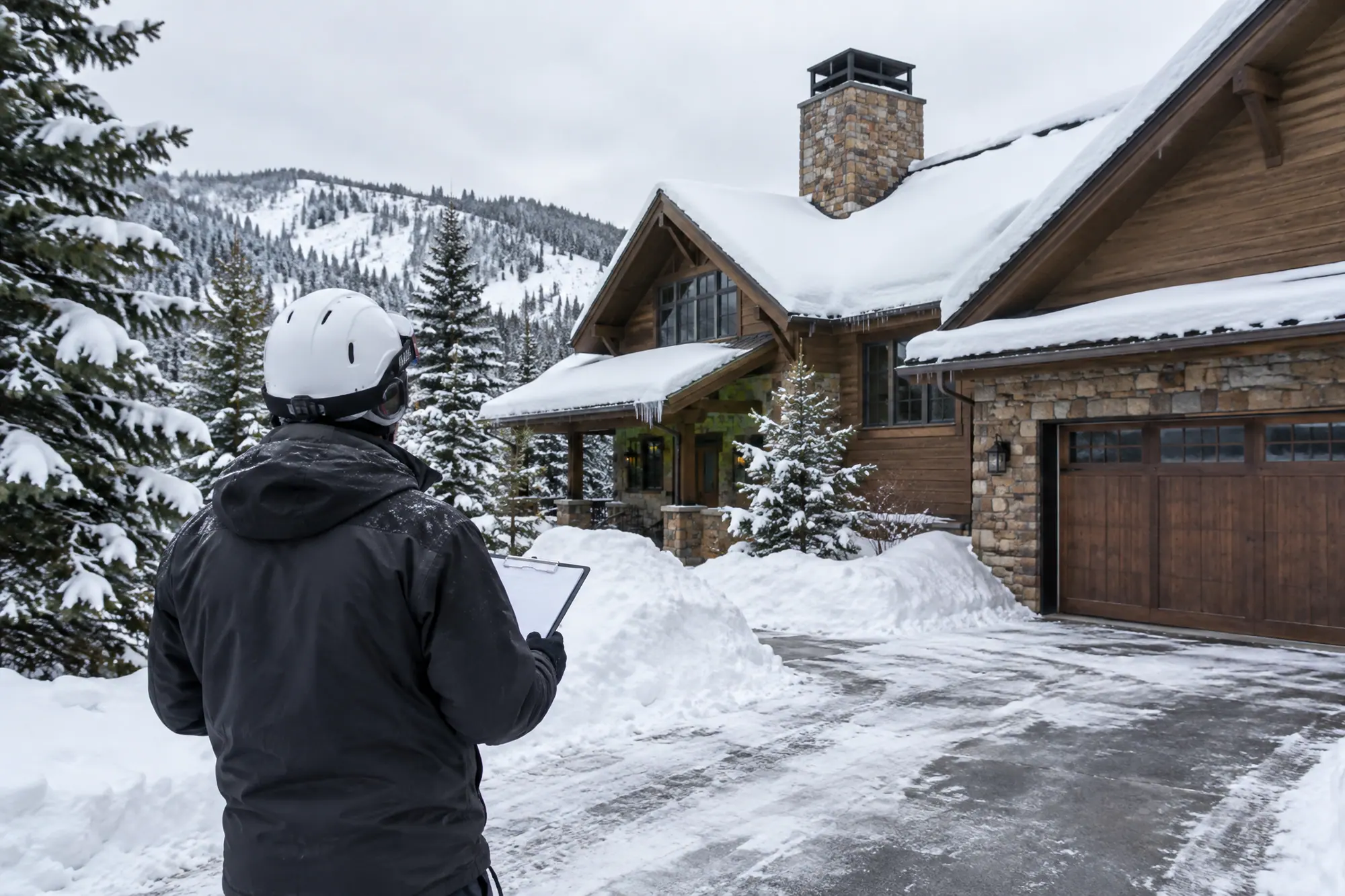
Start with actual access
Drive the route in winter if possible. Ask who plows the road and driveway, how often, and whether the road is public, private or governed by an association. Check parking, snow storage and any steep grades. “Minutes to the resort” can change dramatically in a storm or holiday traffic.
Inspect the building systems
Ask an inspector familiar with local snow loads, roofs, drainage, heating, insulation, freeze protection and ventilation to evaluate the property. The Department of Energy offers guidance on efficient home design, but a specific home needs its own assessment. Review utility reliability and maintenance records. A vacant home may need a winterization plan and an emergency contact.
Read restrictions and risk
Review title, survey, HOA documents, assessments, rental rules, insurance availability and local permits. FEMA’s Map Service Center supplies official flood hazard maps; it is one screening layer, not a complete picture of every mountain risk. Ask local professionals about the site’s conditions and disclosures. Do not count on short-term rental income without verifying legality and economics.
Model four-season ownership
Calculate taxes, insurance, dues, plowing, utilities, repairs and management. Consider summer use, local services and the time required to reach the home. Compare the property’s actual route to skiing with other priorities such as walkability or quiet. A ski home is a specific piece of real estate, not a guarantee of snow or appreciation.
Build a property-specific document file
Collect title, survey, disclosures, utility bills, insurance quotes, tax history, road and plowing agreements, permits and any association documents. Ask an inspector to focus on winter systems and an appropriate specialist to assess roof or drainage concerns. Use public hazard maps as a first screen and local expertise for site-level questions. If the property is advertised as ski-in/ski-out, identify the trail and recorded rights. Keep estimated repairs and annual costs separate from the asking price. This file lets you compare two homes on usable access and ownership obligations, not just photographs and proximity labels.
Visit outside the perfect weekend
A holiday showing can make town services look more active and a sunny day can hide access problems. Return during a storm or quieter season when feasible. Drive to groceries and the resort at the times you would actually go. Ask where snow is stored and who responds to a heating failure when the home is empty. If short-term rental income is in the plan, verify the law and operational costs independently. The home should remain financially and practically sensible even when snow conditions or bookings fall short of a best-case projection.
A two-home due diligence comparison
One house has a short drive to the lift but a privately maintained steep road. Another is farther away on a regularly serviced route and closer to year-round amenities. The buyer gathers road agreements, plowing history, insurance quotes, inspection findings and full annual costs for both. They visit after snowfall, check where snow is stored and test the everyday trip to groceries. If rental use is proposed, they confirm current permissions and net costs. The cheaper asking price does not settle the decision if road or building work is substantial. This framework can reveal which property fits the household’s real travel pattern without assuming any resort-area home is inherently a sound investment.
Planning checklist
Use these points to turn the guide into a plan for the exact resort, date or property:
- Drive winter route
- Review plowing
- Inspect systems
- Read HOA
- Check insurance
- Model annual cost
Frequently asked questions
Does a resort town name prove slope access?
No. Verify the precise route.
Can an HOA limit rentals?
Yes. Read governing documents and local rules.
Is a flood map the only hazard check?
No. Assess the property with local specialists.
Next steps
Sources
- Map Service Center, FEMA (accessed Nov 19, 2026)
- Winter Weather Safety, National Weather Service (accessed Nov 19, 2026)
- Buying a house, Consumer Financial Protection Bureau (accessed Nov 19, 2026)
About Where2Ski Editorial Team
Guides from the Where2Ski editorial team are researched from primary sources such as ski area operators, public land managers, the National Weather Service, official avalanche centers and the CFPB, checked by an editor before publication, and dated when they are reviewed. See the editorial policy for how we source, review and correct articles.
This guide is general information rather than legal, tax or financial advice. Rules and programs change, so check the linked sources and talk with a licensed professional in your state. Spot an error? Tell us.