
Mountain Home Winter Access: Roads, Plowing and Emergency Routes
A driveway that looks simple in August can be the decisive feature of a mountain home in January. Test the legal and physical route separately.
Verify legal access
Review the deed, title, survey and any recorded easements from a maintained public road to the home. A road on a map or a neighbor’s informal practice does not prove a permanent right. Ask whether a private road agreement assigns costs and decision-making. A title professional can explain the actual documents, and a surveyor can clarify location.
Observe winter operations
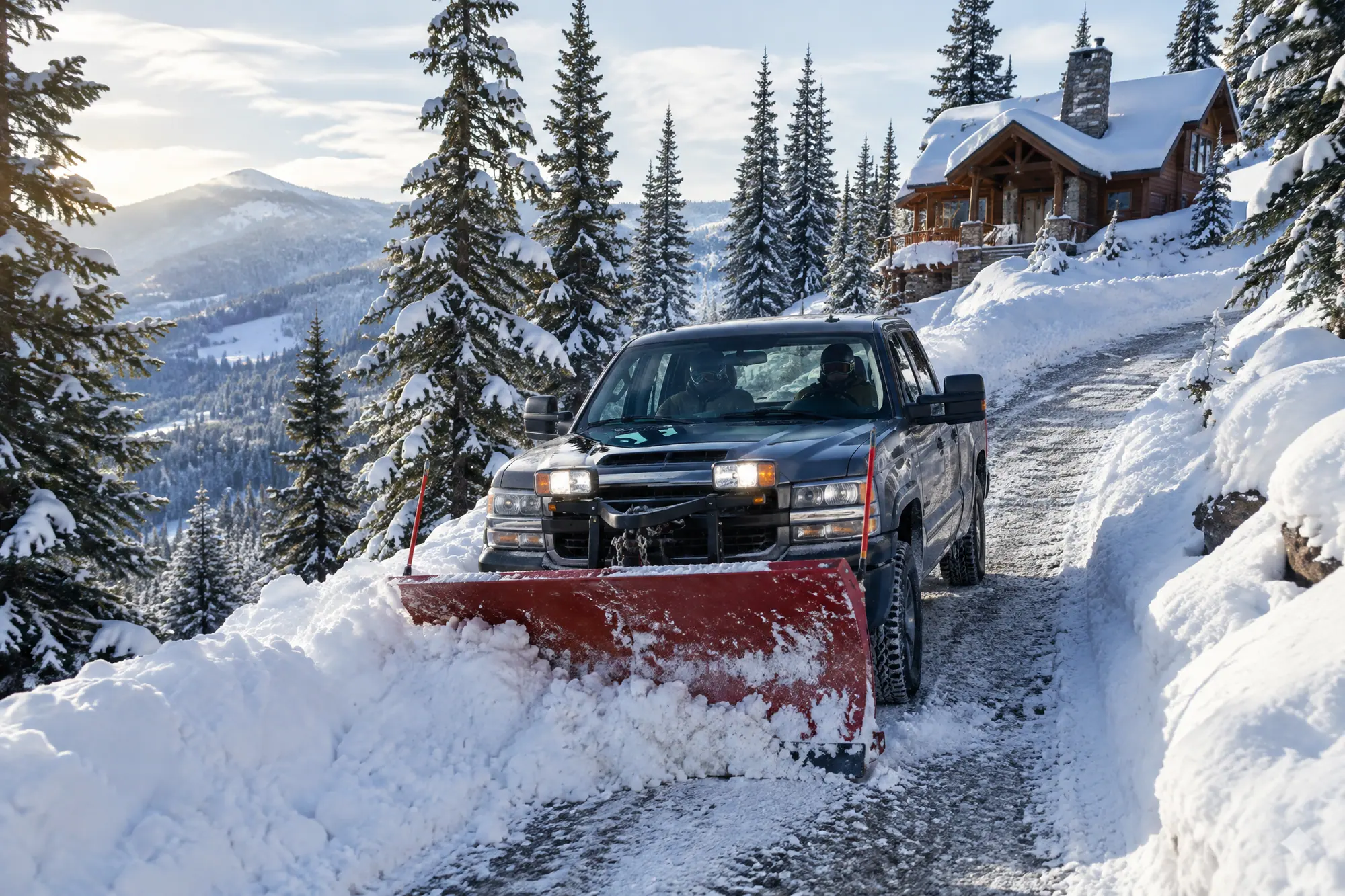
Find out who plows each segment, where snow is stored, how a steep driveway is treated and whether service has a response guarantee. Ask about gates and parking during storms. Visit after snowfall if possible and speak with local road managers. State transportation alerts can describe main-road conditions, but not necessarily a private driveway.
Plan for interruption
Identify an alternate route only if it is lawful and practical. Consider utility outages, delivery access and emergency vehicles. Keep a local contact, winter supplies and a plan for a delayed arrival. The National Weather Service recommends preparing a winter travel kit; household access deserves a similar level of planning.
Build cost into ownership
Budget for road dues, private plowing, roof snow management, vehicle equipment and maintenance. Determine which obligations transfer with the property. If guests or renters will use the home, provide clear route instructions without promising that a road will always be open. A property’s value to you depends on reliable use, not just drive time in clear weather.
Follow every link in the access chain
The route may begin on a state highway, continue over a county road, pass through a private association lane and end at the home’s driveway. Document who owns and plows each segment. Ask whether any gate, bridge or easement has limits on guests, deliveries or emergency vehicles. A property can have a legal access right yet still be difficult to use when snow accumulates. During due diligence, review both recorded documents and physical conditions. A summer drive confirms neither a plowing schedule nor an affordable winter maintenance plan.
Plan for a delayed arrival
If a storm interrupts the route, know whom to call and where to stay. Keep supplies in a vehicle, share travel plans and avoid relying on a single phone with limited coverage. For an unoccupied home, identify someone who can check heat, water and snow load after severe weather. Put private-road dues and individual plowing contracts into the annual budget. If the home will host renters, provide directions that describe real limitations and an emergency contact. A clear access plan protects occupants and makes the property easier to evaluate.
A broken access chain
A mountain home sits off a paved public road, but the final lane is private and plowed only under a voluntary neighbor arrangement. The listing calls it “year-round access.” A buyer requests recorded easements and any road maintenance agreement, asks local providers about service and visits after snow. The public road may be reliably cleared while the last quarter-mile remains uncertain. The buyer can negotiate a documented solution, adjust the valuation or choose a different property. This example shows why both lawful access and practical winter maintenance matter. A map can show a continuous line while the responsibilities and costs change several times along the route.
Planning checklist
Use these points to turn the guide into a plan for the exact resort, date or property:
- Read easements
- Identify plow responsibility
- Visit after snow
- Check steep grades
- Plan outage
- Budget road dues
Frequently asked questions
Does a mapped road prove access?
No. Review recorded rights and current status.
Who plows a private driveway?
Confirm the agreement or service contract.
Can a main road be open while access is blocked?
Yes. Check every segment.
Next steps
Sources
- Winter Weather Safety, National Weather Service (accessed Nov 19, 2026)
- The National Map, USGS (accessed Nov 19, 2026)
About Where2Ski Editorial Team
Guides from the Where2Ski editorial team are researched from primary sources such as ski area operators, public land managers, the National Weather Service, official avalanche centers and the CFPB, checked by an editor before publication, and dated when they are reviewed. See the editorial policy for how we source, review and correct articles.
This guide is general information rather than legal, tax or financial advice. Rules and programs change, so check the linked sources and talk with a licensed professional in your state. Spot an error? Tell us.