
What Does Ski-In/Ski-Out Mean? Verify the Actual Route
“Ski-in/ski-out” is a marketing description whose practical meaning depends on the specific building, snow cover and ability level of the user.
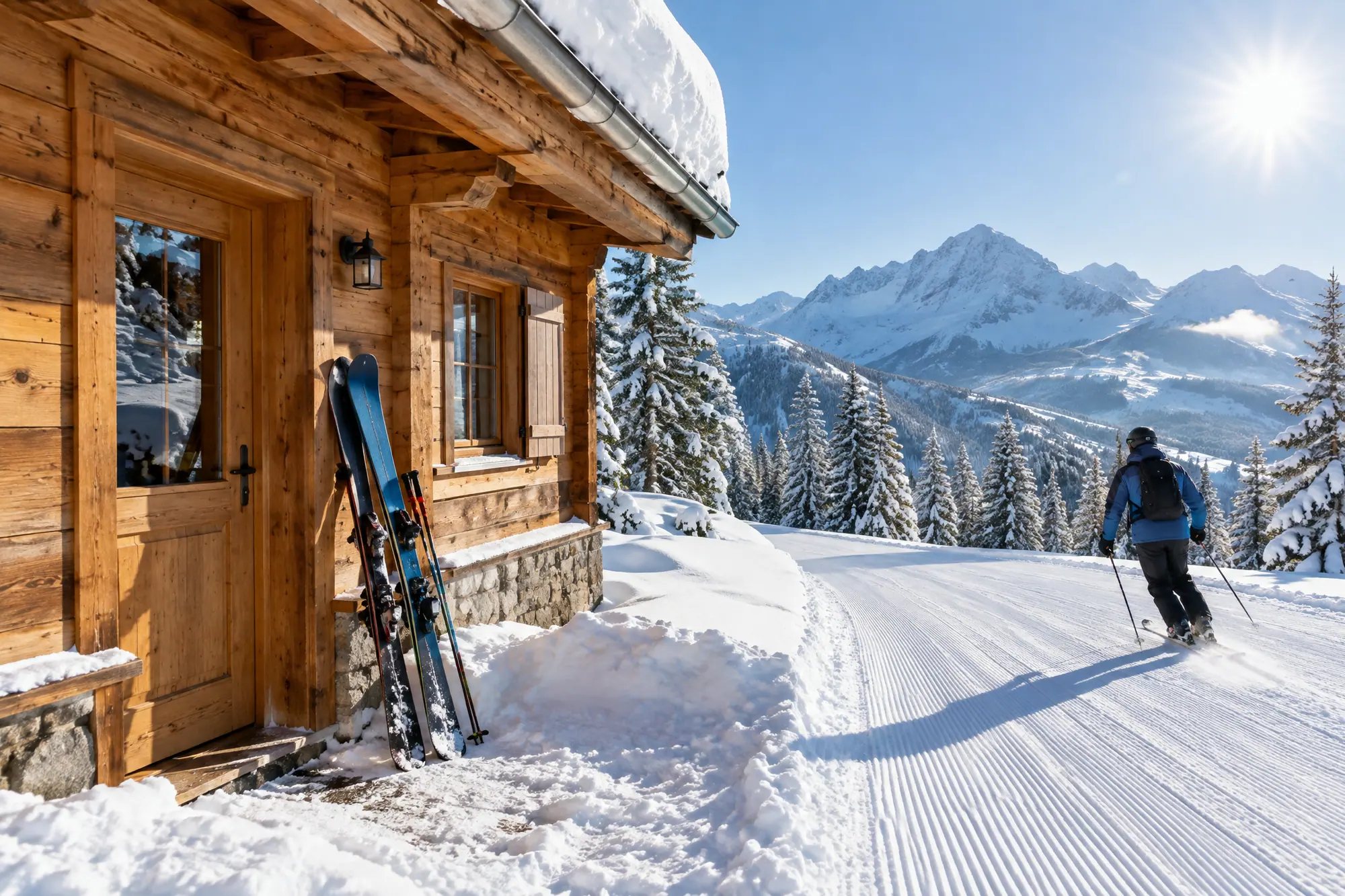
Walk the path on a map
Identify the exact door, ski storage, trail and lift. Ask whether the route crosses a road, stairs, private easement or a neighboring parcel. A building across a parking lot from a lift differs from a unit with a maintained ski trail at its door. Request a current site plan or video taken in ordinary winter conditions.
Test both directions
Skiing out and skiing home can use different grades and trails. An intermediate connector may be unsuitable for a beginner, and a lower-elevation return can close while upper lifts remain open. Ask the resort about trail status and whether the route relies on a specific lift or shuttle. Do not assume a snowmaking system covers every access path.
Review the property rights
For a purchase, inspect recorded easements, association documents and maintenance obligations. A map line across land owned by someone else is not proof of a permanent access right. Determine who maintains the path, removes snow and can close or relocate it. A local title professional and surveyor can clarify rights for the exact parcel.
Price convenience honestly
A reliable, beginner-friendly route may be worth time to a frequent skier; a steep or inconsistent route may not serve the entire household. Compare carrying gear, parking, storage and alternate transportation. Visit in winter if possible and consider how the property works when the ski route is unavailable or the resort is closed.
A practical winter inspection
Start at the unit door with skis and boots as a guest would. Walk to the snow route, note road or stair crossings, identify the lift it reaches and ski the return if conditions allow. Record the trail rating and whether a novice could complete it. Ask what happens when the return trail is closed or snow has melted near the building. For a purchase, request recorded access and maintenance documents. A one-day visit cannot prove availability throughout a season, but it can uncover important differences between marketing language and everyday use.
Questions for an owner or manager
Who maintains the access path? Is the route on resort, association, public or neighboring land? Are gates, shuttles or lifts needed in one direction? Is access promised in governing documents or merely customary? Does the path cross a road or shared driveway? If a household includes beginners, is there a green route home? Ask for the current season’s operating information and walk the route. If a seller cannot substantiate a legal or practical claim, value the property based on the access you can verify, not on an attractive phrase in the listing.
A misleading ski-access description
A condo advertises ski-in/ski-out, and a map shows a trail near the building. During a winter visit, a buyer learns that reaching the trail involves stairs and a road crossing, while the return is an intermediate connector that can close before other terrain. The condo may still be an excellent property, but it does not meet a beginner household’s assumed door-to-green-run expectation. The buyer requests association and easement documents and prices an alternate shuttle route. This hypothetical case shows why legal access, physical route and seasonal reliability must be tested separately. A seller’s phrase should be translated into steps a person can actually complete with skis and boots.
Planning checklist
Use these points to turn the guide into a plan for the exact resort, date or property:
- Locate exact door
- Map both directions
- Check trail grade
- Review easements
- Ask about maintenance
- Visit in winter
Frequently asked questions
Is ski-in/ski-out a legal guarantee?
No. Verify recorded rights and actual route.
Can the return trail close before the mountain?
It may; check resort operations.
Does it suit beginners automatically?
No. Inspect the grade and trail rating.
Next steps
Sources
- Your Responsibility Code, National Ski Areas Association (accessed Nov 19, 2026)
- The National Map, USGS (accessed Nov 19, 2026)
About Where2Ski Editorial Team
Guides from the Where2Ski editorial team are researched from primary sources such as ski area operators, public land managers, the National Weather Service, official avalanche centers and the CFPB, checked by an editor before publication, and dated when they are reviewed. See the editorial policy for how we source, review and correct articles.
This guide is general information rather than legal, tax or financial advice. Rules and programs change, so check the linked sources and talk with a licensed professional in your state. Spot an error? Tell us.