
Resort Skiing vs. Backcountry Skiing: Know the Boundary
A marked ski area and an adjacent snowy slope can look similar from a lift. The operational support, hazards and skills required can be very different.
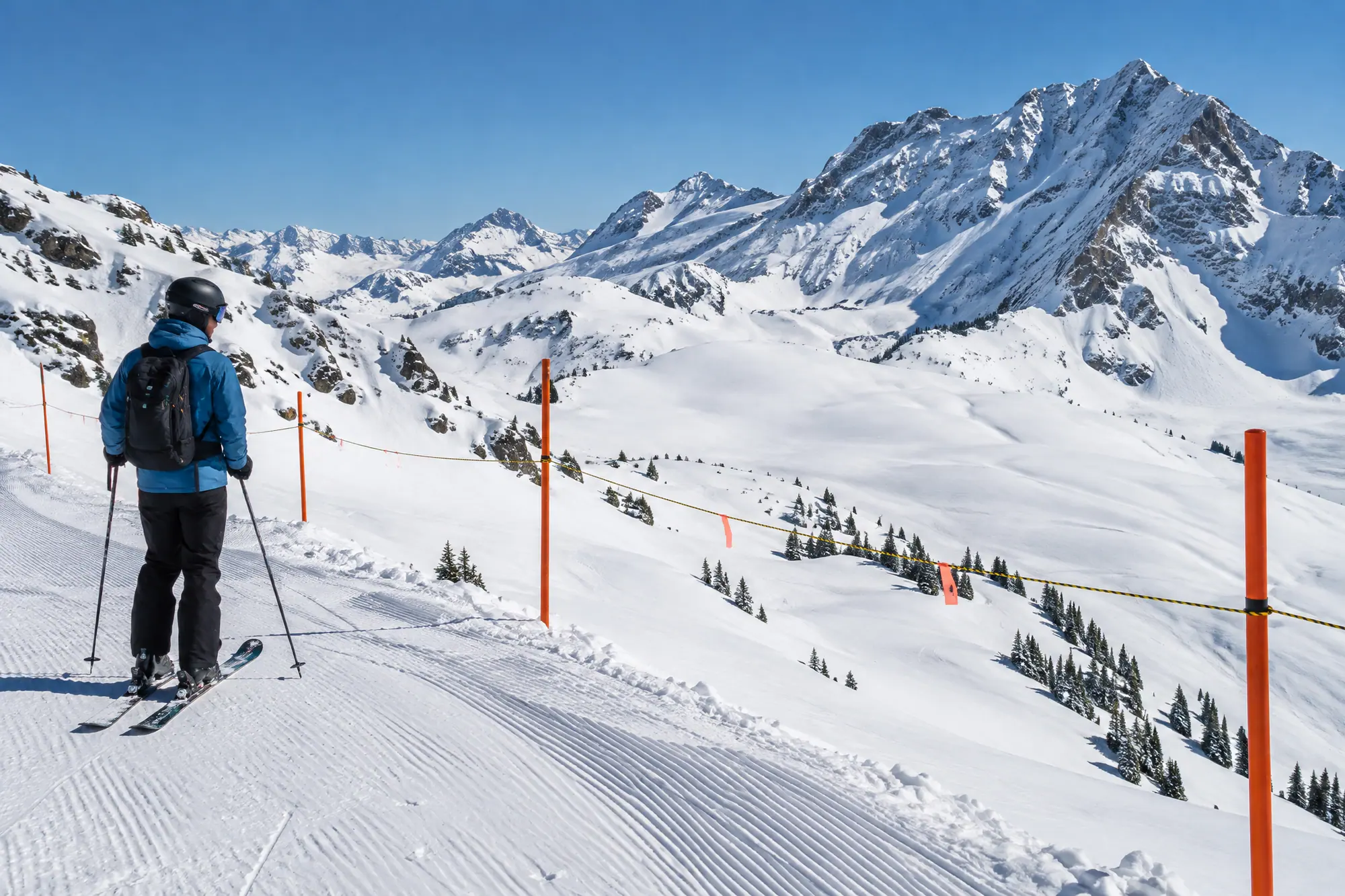
Understand managed terrain
Within a ski area, the operator publishes open lifts, trails, closures and rules. Patrol and other services exist within defined operations, but hazards remain and the Responsibility Code still applies. Ski-area boundaries and access gates should be read exactly as posted. A fresh track beyond a rope is not an invitation to follow it.
Understand the transition
Beyond a managed boundary, avalanche terrain, navigation, weather, rescue time and private land can become central. Even an open backcountry access gate does not mean the route is controlled or safe. Avalanche.org explains that a forecast assesses danger and snowpack but is only the starting point; people must choose appropriate terrain and manage their own risk.
Build the right preparation
Backcountry travel requires education, a local forecast, suitable equipment, practiced rescue skills and partners with a shared plan. A resort skier should not assume good downhill technique provides avalanche judgment. Ask about access rules, terrain, weather and an exit route. Consider formal training and experienced local guidance before leaving managed slopes.
Keep the day within the plan
If the group lacks education or conditions are uncertain, ski open in-bounds terrain. There is no obligation to cross a boundary to find fresh snow. Check the ski area’s uphill and access policies separately from the general trail map. Tell someone the planned route whenever traveling away from normal resort operations.
A boundary decision in plain terms
A ski area may have a gate near attractive snow. Before using it, a skier would need to know whether it exits the managed area, what terrain lies beyond, how to return and whether the group has the training and equipment for avalanche rescue. A track through the gate answers none of those questions. If the answers are uncertain, continue skiing open resort terrain. Even in-bounds, obey ropes and closures because operations and hazards may be invisible from the lift. Read the posted boundary information rather than assuming a gate has the same meaning at every resort.
Preparation before a future backcountry trip
Start with a formal course and practice identifying avalanche terrain, interpreting forecasts and using rescue equipment with partners. Choose an appropriate local objective and make a route plan that includes alternatives and turnaround points. Check the land manager’s access rules and the avalanche center’s current advisory. Arrange communication and tell someone the itinerary. A guide can help with a first unfamiliar route, but the party should still understand the plan. Strong resort technique is useful for the descent; it does not automatically teach snowpack judgment, navigation or rescue.
A decision at the resort boundary
Three friends are comfortable on open advanced trails and see tracks through a boundary gate. They have no current avalanche forecast, practiced rescue plan or mapped return. Their downhill skill does not answer whether the adjacent terrain has avalanche exposure or a lawful exit. They continue within open resort terrain and plan a future backcountry course instead. If they later return with education and equipment, they will check the local forecast, land access and conditions and choose a conservative route. This example separates two decisions that can be confused: skiing skill inside a managed area and the ability to assess unmanaged snow terrain. A gate or track is information about access, never a safety guarantee.
Planning checklist
Use these points to turn the guide into a plan for the exact resort, date or property:
- Read boundary signs
- Check forecast
- Seek training
- Carry appropriate gear
- Plan with partners
- Choose safe terrain
Frequently asked questions
Does an open gate mean avalanche control?
No. Read the specific boundary notice.
Is a forecast a guarantee of safety?
No. It informs terrain decisions.
Can strong resort skiers go anywhere off-piste?
Downhill skill alone is insufficient for unmanaged terrain.
Next steps
Sources
- Your Responsibility Code, National Ski Areas Association (accessed Nov 19, 2026)
- Get the Forecast, Avalanche.org (accessed Nov 19, 2026)
- U.S. Avalanche Centers, Avalanche.org (accessed Nov 19, 2026)
About Where2Ski Editorial Team
Guides from the Where2Ski editorial team are researched from primary sources such as ski area operators, public land managers, the National Weather Service, official avalanche centers and the CFPB, checked by an editor before publication, and dated when they are reviewed. See the editorial policy for how we source, review and correct articles.
This guide is general information rather than legal, tax or financial advice. Rules and programs change, so check the linked sources and talk with a licensed professional in your state. Spot an error? Tell us.