
Where to Stay on a Ski Trip: Slopeside, Village or Nearby Town
The shortest map distance is not always the easiest ski morning. Consider how people and wet gear move between a room and the mountain every day.
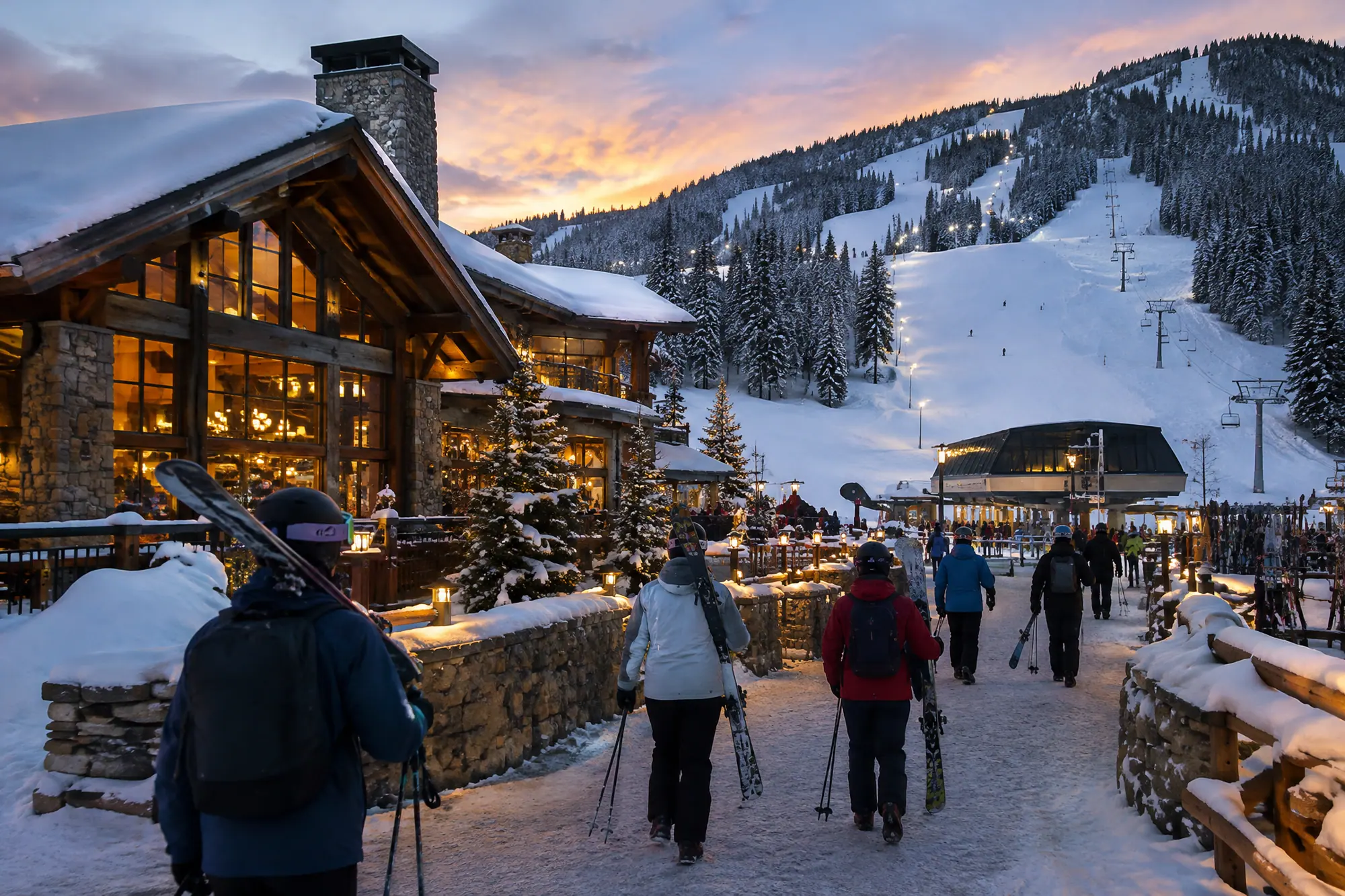
Define the morning route
Ask whether the property is genuinely walkable to the intended lift, reached by shuttle or dependent on a car. A unit labeled “near the mountain” can still require parking and a bus. Confirm winter sidewalk conditions, shuttle hours and the lesson meeting point. A group with first-time skiers may value fewer transfers more than an extra bedroom.
Compare the full price
Include room taxes and fees, parking, transport, breakfast, kitchen access and equipment storage. Check cancellation terms for weather disruption. A more expensive slopeside stay may save a vehicle, while a lower-priced town hotel may give access to groceries and varied activities. Calculate the cost per traveler and the usable ski hours, not the nightly rate alone.
Match lodging to the group
Families may need laundry and space for drying layers. Non-skiers may prefer a walkable town. A group skiing several resorts may choose a central base rather than the base village of one mountain. Check accessibility details such as stairs, elevator, shuttle boarding and the actual route in snow.
Confirm current operations
Restaurant, shuttle, lift and ski-school schedules can differ by date. Read recent property policies and ask direct questions before booking. On arrival, locate the shuttle stop and return pickup; do not wait until a tired afternoon to figure it out. Keep an alternative for a storm day when travel to the mountain is not practical.
The door-to-lift test
Write down every step from the room to the first run: putting on boots, carrying gear, elevator or stairs, crossing a road, waiting for transit, parking, collecting a ticket and reaching the lesson area. Repeat the route in reverse for the afternoon. A property can be close in miles yet awkward with a child or wet equipment. Ask for the exact shuttle stop, frequency and last return. If a listing says ski-in/ski-out, identify the specific trail and whether it is open and suitable for all abilities.
Compare a three-night stay as a whole
For a slopeside condo and a town hotel, add room fees, parking, transportation, food, kitchen value and time spent moving. Include a weather day when some lifts may not operate. The town hotel may offer better dining and non-ski activities; the condo may permit a midday break. Neither is universally better. A group skiing several resorts should also check whether a slopeside location at one mountain creates longer drives to the others. The ideal stay makes the actual itinerary easy, rather than simply looking close to a mountain on a map.
Two lodging listings, two routines
One listing says “near the slopes” and is five road miles from a base with paid parking. Another costs more and is close to a shuttle stop, but the shuttle’s last departure is early. The group maps both morning and afternoon routes for lesson day and for an ordinary ski day. It adds parking, transit and any kitchen savings to the room rates. The answer might differ if one traveler does not ski or a child needs a midday break. Asking about the actual route and schedule is more useful than comparing miles alone. Before booking, they confirm current shuttle service and cancellation terms, because a winter storm can change the value of either location.
Planning checklist
Use these points to turn the guide into a plan for the exact resort, date or property:
- Map door-to-lift
- Check shuttle
- Compare fees
- Plan gear drying
- Read cancellation
- Confirm services
Frequently asked questions
Is “ski access” always ski-in/ski-out?
No. Ask for the exact route and lifts.
Should I price parking?
Yes, with the full trip budget.
Is a nearby town better for multi-resort trips?
It can be; compare drive times and services.
Next steps
Sources
- Winter Weather Safety, National Weather Service (accessed Nov 19, 2026)
- Your Responsibility Code, National Ski Areas Association (accessed Nov 19, 2026)
About Where2Ski Editorial Team
Guides from the Where2Ski editorial team are researched from primary sources such as ski area operators, public land managers, the National Weather Service, official avalanche centers and the CFPB, checked by an editor before publication, and dated when they are reviewed. See the editorial policy for how we source, review and correct articles.
This guide is general information rather than legal, tax or financial advice. Rules and programs change, so check the linked sources and talk with a licensed professional in your state. Spot an error? Tell us.