
Avalanche Forecast for Skiers: What It Can and Cannot Tell You
An avalanche danger rating is an area-wide assessment, not a certificate that an individual slope is safe. The details and travel advice matter.
Find the correct region
Use the local avalanche center for the terrain and date, not a report for the nearest resort by name alone. Avalanche.org lists U.S. centers. Check the issue time, elevation bands, aspect and described problems. Conditions can vary across a forecast area and through the day, particularly after wind or new snow.
Read beyond the color
A forecast describes danger, avalanche problems, weather, snowpack and travel advice. Look for where a problem is expected and what terrain to avoid. A low overall rating does not eliminate isolated hazards; a higher rating calls for more conservative terrain choices. Learn the terms through formal education rather than improvising an interpretation at the trailhead.
Connect forecast to route
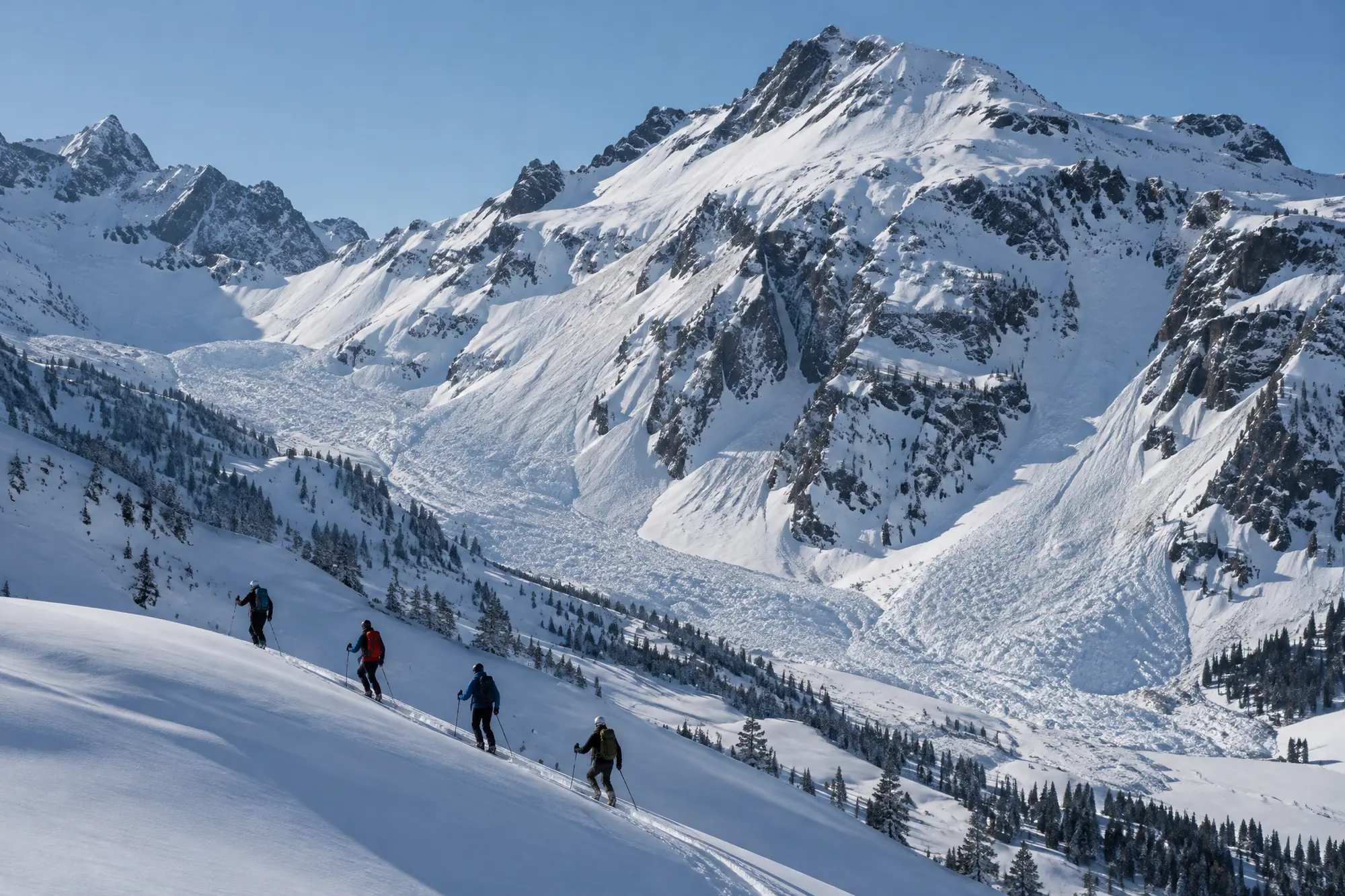
Map each planned slope, approach and exit, including overhead terrain. A low-angle location can be exposed to a slide from above. Have alternatives that avoid the problem terrain and a turnaround point. The forecast is only a starting point; observations and disciplined decision-making remain necessary in the field.
Practice with qualified instruction
Backcountry travel involves rescue equipment and partner skills that a written article cannot teach. Take an avalanche course, practice regularly and consider a qualified guide for unfamiliar terrain. If the group cannot explain its route choice and rescue plan, stay in managed resort terrain. Fresh snow is not a reason to bypass training.
A useful forecast-reading sequence
First, locate the correct forecast zone and issue time. Next, read the danger for the elevations you plan to visit. Then identify each described problem, its aspect or elevation distribution and the travel advice. Finally, compare that description with a mapped route, including the approach and slopes overhead. If the route crosses terrain associated with a problem, select an alternative that avoids it. This sequence is more useful than reading a single colored symbol. Confirm conditions during the day and stay prepared to turn around when field observations do not support the plan.
Why a resort report is different
A resort snow report tells visitors about lifts, trails, grooming and recent weather within its operations. A regional avalanche forecast addresses avalanche conditions in a broader area, often including unmanaged terrain. Neither document grants permission to ignore closures or guarantees an individual slope. A skier seeking fresh snow just outside a boundary should treat that move as a new type of trip with education, equipment, partners and an exit plan. If the group cannot make a conservative terrain decision, enjoy open in-bounds runs instead. The objective is a sustainable series of ski days, not one unplanned descent.
Turning a forecast into a route choice
Suppose a forecast highlights a wind-related problem on particular aspects at higher elevation. A group draws its proposed route and notices that a low-angle approach passes beneath one of those slopes. Simply keeping the skis on gentler ground may not remove overhead exposure. The group considers an alternate route away from that terrain or stays in managed resort areas. They also check the forecast time and whether new wind or snow has changed conditions. This is a hypothetical planning example, not a determination that any specific slope is safe. Education and experienced partners are needed to interpret real terrain, observe conditions and practice rescue when traveling in the backcountry.
Planning checklist
Use these points to turn the guide into a plan for the exact resort, date or property:
- Find local center
- Check issue time
- Read problem details
- Map overhead terrain
- Choose alternative
- Train with partners
Frequently asked questions
Does low danger mean zero risk?
No. Isolated hazards can remain.
Can I use another region’s forecast?
Use the center covering the actual route.
Is reading a forecast enough training?
No. Obtain education and practice with partners.
Next steps
Sources
- Get the Forecast, Avalanche.org (accessed Nov 19, 2026)
- U.S. Avalanche Centers, Avalanche.org (accessed Nov 19, 2026)
About Where2Ski Editorial Team
Guides from the Where2Ski editorial team are researched from primary sources such as ski area operators, public land managers, the National Weather Service, official avalanche centers and the CFPB, checked by an editor before publication, and dated when they are reviewed. See the editorial policy for how we source, review and correct articles.
This guide is general information rather than legal, tax or financial advice. Rules and programs change, so check the linked sources and talk with a licensed professional in your state. Spot an error? Tell us.